ARK Technology Effects on Plant Biological Systems
Executive Summary
This report compiles results from four experimental investigations into the biological effects of ARK Resonator technology—electromagnetically modulated precision geometry piezoelectric quartz resonators engineered by ARK Technology scientists, based on solutions in Unified Physics. Studies were conducted between 2017 and 2021 at XVAL Advanced Laboratories and span multiple plant species and measurement endpoints including germination rate, growth velocity, phytonutrient content, pathogen resistance, fruiting body and vegetable yield, seed production, and post-harvest produce longevity.
Across all studies, treatment groups receiving ARK Resonator exposure—either via direct proximity or through crystal-potentiated water—demonstrated consistent, statistically significant improvements compared to untreated controls. Results were replicated across multiple independent trials and species. A dose-dependent response curve was observed in growth rate studies, with increasing crystal exposure correlating monotonically with improved outcomes. Critically, blocking the crystal's electromagnetic emissions with a Faraday cage abolished the growth enhancement, implicating the electromagnetic field as the primary mechanism of action.

1. Technology Overview
1.1 Precision Geometry Quartz (PGQ)
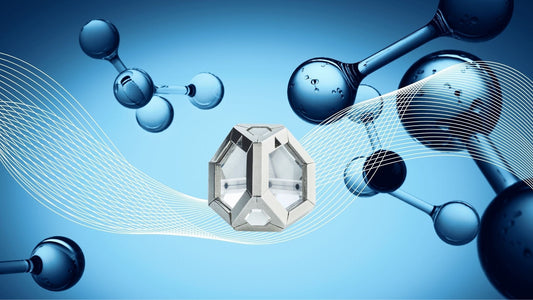
ARK Resonators are monocrystals of silicon dioxide (SiO₂) manufactured via hydrothermal synthesis over approximately two and a half years. Each crystal is optically polished to a precise geometric form—a regular tetrahedron with truncated vertices and chamfered edges—aligned to the crystal's piezoelectric axis. This geometry confers specific resonance frequencies and capacitance properties that distinguish ARK Resonators from standard quartz oscillators.
1.2 Harmonic Flux Resonator (HFR) Activation
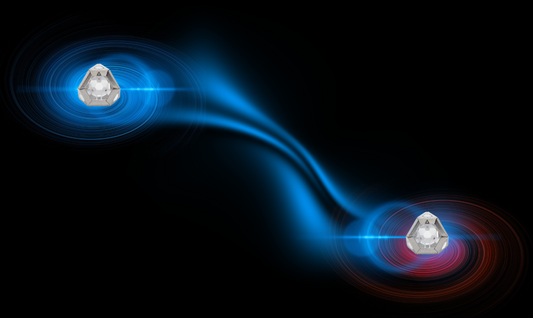
Each crystal is activated by a Harmonic Flux Resonator (HFR), a magnetohydrodynamic device that generates a geometrically structured electromagnetic field via a rapidly rotating toroidal magnetic field. The circularly polarized electromagnetic field forms a standing wave component within the resonance chamber housing the HFR, and this excites a scalar or longitudinal component of the EM field. With the right modulation, this induces a coherence phase in the correlation structure of the quantum electromagnetic vacuum fluctuations (QFVs), acting like a selective filter. The zero-point energy modes that are selected are harmonic with the intrinsic resonances of the ARK piezoelectric quartz resonators, causing them to oscillate. This QVF-driven oscillation has a polarization feedback cycle, driving continuous phonon flux from the quantum vacuum energy density into the crystal lattice of the ARK Resonators. The resonators retain the vibrational spin modes induced by the HFR—a persistent phononic resonance that lasts indefinitely and has persistent field-ordering effects, inducing energy flux and coherence in any environment or materials that the ARK Resonators are in proximity to.
1.3 Mechanism of Biological Effect
The primary hypothesis is that the ARK Resonator exerts its biological effects via modulation of the locale quantum electromagnetic vacuum, acting as a spectral filter that selects zero-point modes of the quantum electromagnetic vacuum that are resonant with water’s absorption spectra. The coupling of water O-H oscillation to the QVF modes in the mid-IR spectrum induces polarization of water molecules, increasing the dipole moment, which strengthens and orders the hydrogen bond network of water. Water's partial dipole character renders it sensitive to oscillating EM fields, particularly in the mid-IR frequency range, leading to rovibratory excitation of hydrogen moieties and greater intramolecular tetrahedral coordination—consistent with the structured water model described by Pollack and colleagues. This structured water state is proposed to enhance biological signaling and metabolic efficiency in treated plant systems.
This mechanistic hypothesis is directly supported by two experimental observations: (1) ARK Resonator effects are transmissible via water that has been potentiated by the device, and (2) shielding the ARK Resonator with an electromagnetic Faraday cage completely abolishes the growth enhancement.
2. Study 1 — Plant Vitality & Growth Parameters (2017)
Report NIN:012 | ARK Resonator LLC Advanced Laboratories | Haramein et al.
This foundational study tested ARK Resonator effects across multiple parameters of plant biological vitality using wheatgrass and radish as primary species. Experiments were conducted in environmentally controlled conditions with repeated trials. Test groups received water treated with ARK Resonator units; control groups received untreated water.
2.1 Seed Germination Rate
Seeds treated with ARK Resonator-potentiated water consistently achieved superior germination rates. In a representative trial measuring sprouting success, ARK Resonator groups demonstrated a 96% germination rate compared to 77.6% in controls. A separate trial recorded 94% vs. 74%. Root radicle length in germinating seeds was on average 300% greater in the crystal groups, indicating enhanced early-stage metabolic vigor.
A dose-response germination study assigned 8 groups to incrementally increasing ARK Resonator water exposure times: 10 min, 15 min, 30 min, 60 min, 2 hours, and continuous exposure, plus a negative control and a MiracleGro© positive control. All crystal-treated groups exceeded the negative control. Groups exposed for 30 minutes or longer outperformed MiracleGro©. Response plateaued at approximately 48 hours of exposure.

2.2 Growth Rate — Spectrophotometric Quantitation
Plant growth density was quantified using relative spectral intensity analysis (green-channel photometric absorption), which correlates with both chlorophyll density and plant count per unit area. Compared to controls:
-
Spectral intensity was 420.54% greater in standard ARK Resonator tests (Figures 4 & 7).
-
In the highest-exposure Faraday cage comparison, spectral intensity reached 7,858.12% greater than the shielded control.
-
Crucially, when the ARK Resonator was placed inside an electromagnetic shielding Faraday cage, the growth enhancement was eliminated, confirming the EM field as a necessary component of the effect.
In a fully hydroponic system with continuous water flow over the crystal, treated plants showed 350% greater average growth rate after 3 days.

2.3 Phytonutrient Content
Spectrophotometric analysis of chlorophyll content in radish leaves showed an average 35.13% greater chlorophyll concentration in ARK Resonator groups. Leaf surface area was 145.28% greater on average. These findings indicate that crystal treatment enhances not merely growth volume but also nutritional quality of the plant tissue.

2.4 Pathogen Resistance
Mold susceptibility was assessed by applying an intensified watering regimen to wheatgrass—a species known for high mold vulnerability. Across multiple trials, control groups exhibited significant plant death from mold infestation. ARK Resonator groups showed little to no plant death. Comparative spectral intensity analysis confirmed the higher survival of crystal groups by measuring the persistence of chlorophyll-containing green tissue.

2.5 Fruiting Body & Seed Production
ARK Resonator test groups produced radish fruiting bodies averaging 218.67% greater weight than controls. Seed production experiments quantified 444.4% greater seed count in ARK Resonator groups (49 seeds vs. 9 seeds in control groups).

3. Study 2 — Seed Germination Rate Quantitation (2018/2020)
Haramein N., Alirol O., Brown W. | Torus Tech LLC / XVAL Advanced Laboratories
This study provided a more rigorous statistical characterization of seed germination enhancement, using Raphanus raphanistrum (radish) as the model organism with formal inferential statistics.
3.1 Experimental Design
Four groups of 30 seeds each were placed in phytoagar with a ARK Resonator unit beneath the growth platform (ARK Resonator 1, n=120; ARK Resonator 2, n=120). Two equivalent control groups received no crystal. Germinated seed counts were taken at 12-hour intervals over a 48-hour window.
3.2 Germination Results
The ARK Resonator Group 1 had a mean germination of 24.75 seeds (SD=6.50), versus 16.5 (SD=3.42) in Control Group 1 — a statistically significant difference: t(238) = 12.30, p = 0.0001, 95% CI [6.92, 9.57]. The average germination rate across both crystal groups was 80.83%, compared to 40.84% averaged across both control groups (55.00% and 26.67% respectively). At the 48-hour measurement, the ARK Resonator 1 group outperformed Control 1 by 25.83 percentage points.
Crystal-treated groups also showed a higher-velocity germination curve, meaning seeds germinated earlier and at a faster rate—not just in greater total numbers.
3.3 Growth Rate — Dose-Response with Tetrahelix Array
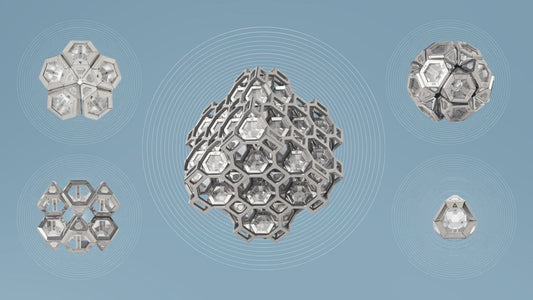
A separate experiment tested a Tetrahelix water-distributor device threaded with 1, 8, or 16 ARK Resonator units. Radish stalk length was measured over 120 hours. All crystal-treated groups outperformed controls (t(60) = 3.43; p = 0.0187). Average stalk length increases compared to control:
-
1 ARK RESONATOR: +173.56%
-
8 ARK RESONATOR: +205.62%
-
16 ARK RESONATOR: +254.01%

This monotonic dose-response relationship—wherein increasing crystal units in the water distribution path produces proportionally greater growth enhancement—is a strong indicator of a real, quantifiable physical effect on water structure. It is also particularly relevant for designing scalable agricultural applications.

4. Study 3 — Daucus carota (Carrot) Yield Quantitation (2020)
Brown W. | Torus Tech LLC | May 15, 2020 | CONFIDENTIAL
This experiment quantified the effect of ARK RESONATOR treatment on carrot yield using a transplant design with hydroponic glass-tube cultivation in a Tetrahelix ARK RESONATOR array.
4.1 Results
Carrots grown with ARK RESONATOR treatment showed substantially greater yield on both measurement dimensions:


Photodocumentation of both groups showed visually striking differences: ARK RESONATOR carrots were larger, more uniform, and displayed healthier foliage, while control carrots were noticeably smaller and showed wilted, discolored greens.
5. Study 4 — Post-Harvest Produce Longevity (2021)
Haramein N., Brown W. | XVAL Advanced Laboratory, Torus Tech LLC | February 2, 2021
Following observations from plant growth studies indicating that ARK RESONATOR influence extends beyond the growth phase, this experiment assessed whether the crystal's field of effect could preserve harvested produce post-harvest — with significant implications for food supply chain applications.
5.1 Experimental Design
100 vine tomatoes were sourced and randomized into 11 groups: 5 control groups of 10 (no resonator), 5 single-crystal ARK Resonator groups of 10, and one group of 10 under an 8-matrix modular ARK Resonator assembly. Groups were maintained at a minimum 3-meter separation to prevent cross-group field influence. Groups were monitored via time-lapse photodocumentation and assessed against five criteria:
-
Length of time produce remained edible
-
Time until visible discoloration began
-
Rate of mold growth and decomposition onset
-
Rate of desiccation (wrinkling and shriveling)
-
Total time to complete decomposition
5.2 Results
ARK Resonator-treated groups showed significantly prolonged shelf-life across all five criteria versus controls. The 8-matrix modular assembly produced the most pronounced effect, with tomatoes remaining fresher and intact substantially longer than either the 1-crystal groups or the control groups. This finding mirrors the dose-response pattern observed in growth studies, suggesting that modular ARK Resonator arrays amplify the field effect in a scalable, predictable manner. Note: in the image the ARK Resonator is labeled with an old moniker “PGQMEM”, for precision geometric quartz modulated electromagnetically.

Control tomatoes showed earlier discoloration, wrinkling, and mold onset. Photodocumentation clearly captured the contrast: 8-matrix treated tomatoes remained visibly firm and vibrant while controls had deteriorated substantially.

6. Cross-Study Synthesis & Mechanistic Discussion
6.1 Consistency Across Studies
The four studies presented herein span four years, multiple research teams, and a diverse range of plant species and experimental conditions. Despite this diversity, a coherent pattern emerges: ARK RESONATOR technology consistently and significantly improves all assessed parameters of plant vitality and post-harvest longevity. This cross-study consistency substantially reduces the probability that observed effects are artifacts of a single experimental setup.
6.2 Dose-Response as Evidence of Real Effect
Two independent experiments demonstrated clear dose-response relationships. The incremental water exposure time study (Study 1) showed saturation at ~48 hours, consistent with a biochemical or physical threshold response. The Tetrahelix multi-crystal study (Study 2) showed monotonic growth improvement from 1 to 8 to 16 crystals. In Study 4, the 8-matrix assembly produced greater longevity than a single crystal. This reproducible, quantitative dose-dependency is one of the strongest indicators of a genuine causal effect.
6.3 Faraday Cage Control as Mechanistic Evidence
The most direct mechanistic evidence comes from Study 1's Faraday cage experiment: when the ARK Resonator was electromagnetically shielded, growth enhancement was completely eliminated — the shielded crystal group performed identically to the untreated control. This strongly implicates the crystal's electromagnetic emission as the proximate cause of observed biological effects, rather than any direct material contact or chemical interaction.
6.4 Water as the Mediating Substrate
The transmissibility of the effect via Resonator-potentiated water—demonstrated in multiple independent experiments—points to water as the primary biological mediating substrate. This is consistent with the quantum vacuum coupling model in which the ARK Resonator's resonant field induces greater intramolecular coherence in water via hydrogen bond network restructuring. This structured water would then carry the biologically active information into the plant system through root uptake and vascular transport.
6.5 Implications for Agricultural Applications
The results collectively suggest that ARK Resonator technology offers a potentially transformative, non-chemical approach to improving agricultural productivity. Key observed benefits include:
-
Higher germination success rates, reducing seed waste and replanting costs
-
Faster growth cycles with the potential to increase crop rotations per season
-
Greater yield (weight and number) per planting area
-
Enhanced nutritional content (chlorophyll, phytonutrient density)
-
Reduced pathogen losses without chemical intervention
-
Extended post-harvest shelf life, reducing food waste throughout the supply chain
7. Recommended Next Steps
While results across these studies are consistent and compelling, the following steps are recommended to further validate findings and prepare for broader adoption:
7.1 Independent Third-Party Replication
Studies 1–4 were conducted internally at XVAL Advanced Laboratories. Independent replication at university or certified agricultural research institutions is the highest priority for establishing external validity. The produce longevity report (Study 4) explicitly calls for this next step.
7.2 Molecular Mechanism Studies
Transcriptomic and proteomic profiling of treated vs. control plant tissues would identify the specific genetic and biochemical pathways activated by ARK RESONATOR-treated water. This would bridge the gap between observed macro-level effects and the proposed quantum vacuum / water structuring mechanism.
7.3 Spectroscopic Water Characterization
Infrared (IR), Raman, and small-angle X-ray scattering (SAXS) analysis of ARK RESONATOR-potentiated water compared to untreated water would directly characterize any structural differences in the hydrogen bond network, providing a physicochemical foundation for the biological effects observed.
7.4 Agricultural Field Trials
Controlled field trials with economically important crops under realistic growing conditions are needed to quantify the practical yield improvement achievable with ARK RESONATOR Tetrahelix water delivery systems and modular crystal arrays at scale.
7.5 Expanded Longevity Studies
The produce longevity study was preliminary. Expanded studies with diverse produce categories, quantified time-points, and blinded assessors would provide publication-ready data for the food storage and supply chain market.
8. Source Documents